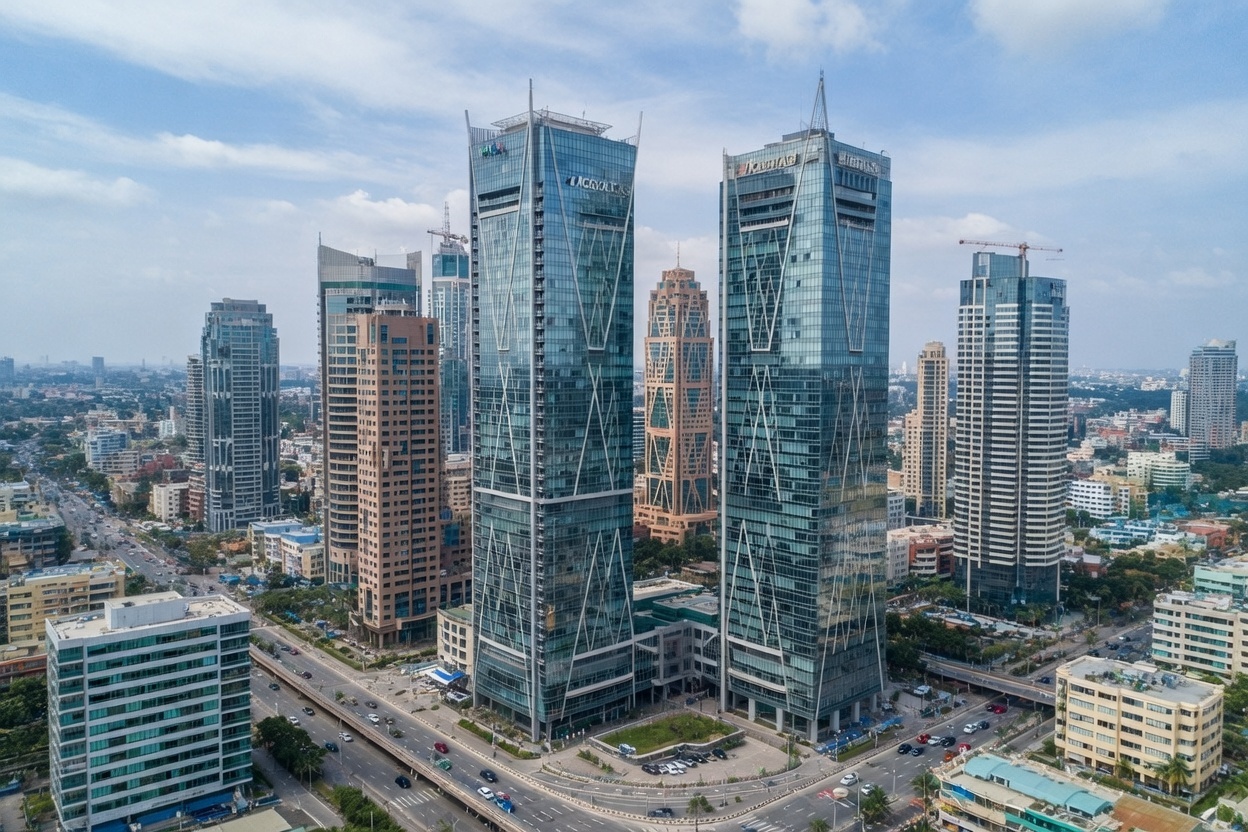
Economic Overview
An overview of Nigeria's economy, trade performance, and investment opportunities
An overview of Nigeria’s trade flows, key export and import products, trading partners, and agreements.
GDP
$477.4 billion
Total GDP (2024)
Population
223 million
2024
GDP growth
2.9%
2024
Key Economic Indicators
Nigeria's economy presents a complex picture of challenges and opportunities. The country remains Africa's largest economy by GDP, with significant potential driven by ongoing reforms and a youthful population. Below are key metrics that define Nigeria's current economic landscape.
Output and growth
Total GDP (USD billions)
Current GDP: $477.4 billion (2024) | GDP per capita: $2,066
Annual GDP Growth Rate
Current Growth: 2.9% (2024)
Sovereign Credit Ratings
Fitch
B
Stable outlook
Moody's
B2
Stable outlook
S&P
B-
Stable outlook
Prices & Monetary Policy
Annual Inflation Rate
Source: https://data.worldbank.org/country/nigeria
Inflation (Annual)
28.2%
December 2025
Monetary Policy Rate
27.25%
November 2025
Exchange Rate (NGN/USD)
₦1,675/$
January 2026
Foreign Exchange Rate
Gross & Net FX Reserves (USD Billion)
Gross reserve
FX reserve
Gross FX Reserves: $36.8 billion
Source: https://proshare.co/articles/nigerias-external-reserves-increased-to-us40.9bn-in-december-2024
Demographics & Human Development
Population
223 million
2024
Life Expectancy
54.7 years
54.7 years (gradual improvement)
Unemployment
5.3%
Q3 2024
Main Sectors of the Economy
Nigeria is Africa's fourth-largest economy by GDP, with a diverse economic structure.
Sector contribution to GDP
Telecommunications, financial services, trade, real estate, and information technology
Crop production, livestock, forestry, and fishing. This sector employs over 35% of the workforce
Oil & gas (8-10% of GDP), manufacturing, construction, mining, and quarrying
Investment Climate
Nigeria's economy offers investors opportunities rooted in a large market, growing sectors, and policy reforms.
Key investment drivers and opportunities include:
Sector
Sector attractiveness
Source
Agriculture & Agribusiness
Vast arable land (84 million hectares), favorable climate, growing food demand, and government support for value chain development
Technology & Fintech
Young tech-savvy population, growing internet penetration, thriving startup ecosystem, and increasing digital payment adoption
Manufacturing
Local content policies, access to ECOWAS market (400 million people), and availability of skilled labor
Infrastructure
Huge infrastructure gap, government PPP framework, and potential for long-term returns
Investment Incentives & Protections
Incentive
Benefit to investor
Source
Pioneer Status Tax Holiday
Up to 5 years of corporate income tax exemption for companies in pioneer industries
Free Trade Zones
100% foreign ownership, duty-free import of equipment and raw materials, tax holidays
Investment Allowances
Capital allowances of up to 100% in the year of expenditure for qualifying assets
Export Expansion Grants
Tax-deductible grants for non-oil exporters to encourage export diversification
Challenges and Opportunities
Opportunities:
• Largest economy and consumer market in Africa with 231 million people
• Abundant natural resources (oil, gas, minerals, arable land)
• Strategic gateway to West African regional market (ECOWAS)
• Rapidly growing technology and fintech sector
• Young and entrepreneurial population (median age: 18.6 years)
• Ongoing infrastructure development programs
Challenges
• Infrastructure deficits (power, transportation, logistics)
• Security concerns in certain regions
• Foreign exchange volatility and liquidity constraints
• Complex regulatory environment and bureaucratic processes
• Limited access to long-term financing
• Skilled labor shortages in certain technical areas
Trade Inquiries
Federal Ministry of Industry, Trade & Investment
Block H, Old Secretariat, Area 1, Garki, Abuja, Nigeria.
+234 (0) 123-456-7890 • +234 (0) 987-654-3210
info@fmiti.gov.ng
Disclaimer: Trade data provided are for reference and should be confirmed with official sources (NBS, CBN, FMITI).
Federal Republic of Nigeria
Political system
Federal Republic
Capital
Abuja
Commercial centre
Lagos
Currency
Nigerian Naira (NGN)
Population
223 million (2024 est.)
Total area
923,768 km²
GDP
$477.4 billion (2024 est.)